CUØ /'kjuːnɪl/

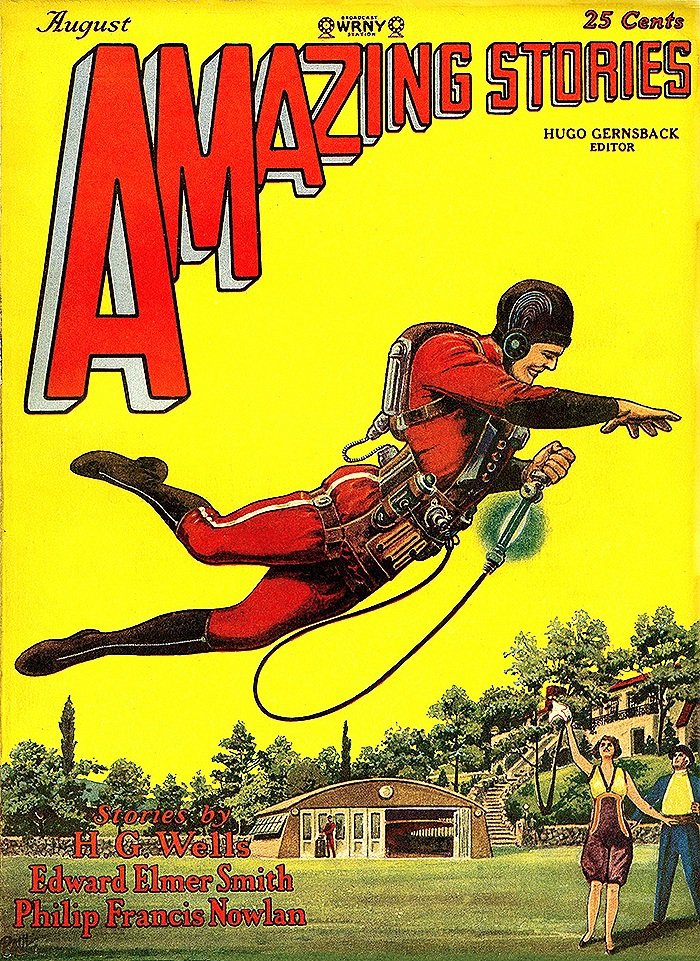
This series of studies examines literary history through changing conditions of creative labor. We ask how the use of industrial writing techniques, prefabricated forms, distributed authorship, and other changes in the organization of writing left traces in the texts themselves. Our approach combines computational analysis with literary-historical and archival methods to recover a history of popular writing in which changes in prose can be connected to changes in how literature was produced.
The Standardization of Fast Fiction
[Study design submitted to CHR2027 Short Paper track in August, 2026]
The rapid expansion of popular fiction at the turn of the twentieth century depended on more than simply writing more. In this paper, we examine whether a new regime of high-volume literary production left measurable traces in the prose itself. First, we ask whether pulp fiction became more internally predictable. We then test whether those regularities were shared across writers by asking whether the work of a held-out pulp writer can be predicted more readily from the prose of other pulp writers than comparable works can be predicted within two control corpora. We analyze these differences within a Bayesian framework, using a same-genre design, a pre-pulp historical baseline, and a contemporaneous non-pulp control. Here, standardization refers to shared textual constraint: the extent to which regularities found in one work recur across others. If that constraint becomes stronger under industrial production, we can connect changes in the organization of literary labor to corresponding changes in the prose.
Text Reuse in the Pulp Magazine Archive
in collaboration with Heejin Kim and team, Digital Humanities Engineering Center, Kyungpook National University
[Study design submitted to Computational Humanities Research in August, 2026]
How often do literary texts repeat one another? And when does repetition become evidence of influence or plagiarism? We address this question through a large-scale study of pulp fiction, a form shaped by unusually rapid and industrialized conditions of literary production. Using the Internet Archive’s Pulp Magazine Collection, we construct a story-level corpus to identify both verbatim and paraphrastic reuse across works. Rather than treating every match as equally meaningful, we estimate separate background distributions for each form of reuse, conditioned by publication date, topical similarity, authorship, and publication context. This allows us to ask not only how much textual recurrence occurs, but how unusual a particular instance might be among comparable works, and whether expected levels of recurrence changed over time. Finally, we use exceptional reuse clusters to reconstruct several corpus-wide literary genealogies that may be difficult to recover by conventional means. The study aims to place judgments of derivation and originality on a more explicitly historical and empirical footing.